

The Journal
Thoughtful insights on workspace design, ergonomics, and alignment—curated for modern work life.
Where function meets intention.
Style, Comfort & Price: Understanding How Customers Really Choose an Office Chair
After more than 30 years in merchandising and product development, I've watched thousands of customers shop for office furniture.
Many walked into a store convinced they already knew exactly what they wanted. Some came in searching for a specific chair they had seen online. Others were drawn to a particular style, color, or brand. Yet more often than not, the chair they ultimately purchased wasn't the chair they originally came in to buy.
Why?
Because successful purchase decisions are rarely driven by a single factor.
Throughout my career, it was my responsibility to help customers make informed decisions through product selection, merchandising, point-of-purchase materials, pricing strategies, and educational content. My goal wasn't simply to sell a chair. It was to help customers find the chair that best meet their needs.
What I learned is that most office chair purchases follow a predictable decision-making process.
Customers typically evaluate chairs in this order:
Style. Comfort. Price.
Understanding these three factors can help consumers make a more confident and satisfying purchase decision.
Style: The First Impression
The buying journey almost always begins with style.
Customers are visually drawn to products that reflect their personal taste and complement their workspace. Before they ever sit in a chair, they are already evaluating its appearance.
Does it look modern or traditional?
Does it fit the aesthetic of the room?
Does it project professionalism, creativity, comfort, or sophistication?
Whether consciously or subconsciously, style creates the initial emotional connection.
A beautifully designed chair captures attention and earns consideration. It invites the customer to take the next step in the buying process.
However, style alone rarely closes the sale.
Comfort: The Moment of Truth
Once a customer is drawn to a chair, comfort becomes the deciding factor.
This is the moment when customers sit down and begin evaluating how the chair feels.
Does the seat provide adequate support?
Does the backrest support the natural curve of the spine?
Do the armrests feel comfortable?
Is the seat depth appropriate?
Can they imagine sitting in the chair for several hours each day?
This is where many purchase decisions are won or lost.
No matter how attractive a chair may appear, discomfort quickly eliminates it from consideration.
Comfort goes far beyond cushioning. True comfort is created through proper ergonomic support, body alignment, pressure relief, adjustability, and overall fit.
The best chairs support the body in a way that promotes both wellness and productivity.
Price: Determining the Investment
Once style and comfort requirements have been met, price becomes the final consideration.
Contrary to popular belief, customers are not always searching for the lowest price.
Instead, they are determining the level of investment they are willing to make.
Customers ask themselves:
Is this chair worth the price?
Does the comfort justify the investment?
Will it provide long-term value?
Price is often the final filter that helps customers narrow their choices and make a decision they feel confident about.
The goal isn't necessarily to purchase the least expensive chair. The goal is to find the best balance between style, comfort, and budget.
Finding the Right Balance
The best office chair isn't always the most expensive chair.
Nor is it necessarily the chair with the most features.
The right chair is the one that successfully balances style, comfort, and price for the individual using it.
When those three factors align, customers are more likely to feel satisfied with their purchase and enjoy the benefits of a workspace that supports both performance and wellbeing.
After decades of helping customers make workspace decisions, I've found that this simple framework remains remarkably consistent.
Style captures attention.
Comfort earns confidence.
Price determines commitment.
Together, they influence nearly every office chair purchase decision.
Work well. Live well.
— Marlene Ruiz
Founder & Workspace Wellness Authority
Styled For Work Life
Style and Support: Office Chairs That Elevate Your Space Without Sacrificing Comfort
A beautifully designed workspace is a reflection of one’s personality — a space where style, focus, and confidence come together. The chair you choose is more than just a functional piece; it’s an extension of how you want to feel in your environment each day. While style often draws us in first, lasting satisfaction comes from selecting a chair that supports you just as beautifully as it looks. Below, I’ve curated five options that balance refined design with meaningful, all-day comfort.
What to Look for Beyond the Silhouette
A well-designed office chair should do more than complement your space — it should support how you work each day. True comfort begins with thoughtful ergonomics: adjustable height, balanced lumbar support, and the ability to move naturally as your posture shifts.
Materials matter just as much. Mesh offers breathability, leather brings structure and polish, and quality fabric provides warmth and softness. The right choice depends on your environment and how you want your space to feel.
Proportion and harmony are equally important. A chair should balance with your desk and surrounding pieces, enhancing the room rather than overpowering it. And finally, durability counts. Well-made construction and reliable materials ensure your chair supports you not just today, but for years to come.
How I Selected These Picks
With over three decades of experience in merchandising and workspace furnishings, I approach chair selection through a layered lens: proportion, material quality, adjustability, long-term durability, and how each piece visually integrates into a thoughtfully designed room. These picks were chosen not only for their aesthetic appeal, but for how they perform over time — balancing style, support, and value across different price points and work styles.
1. TRALT Office Chair – Ergonomic Desk Chair
Everyday Pick
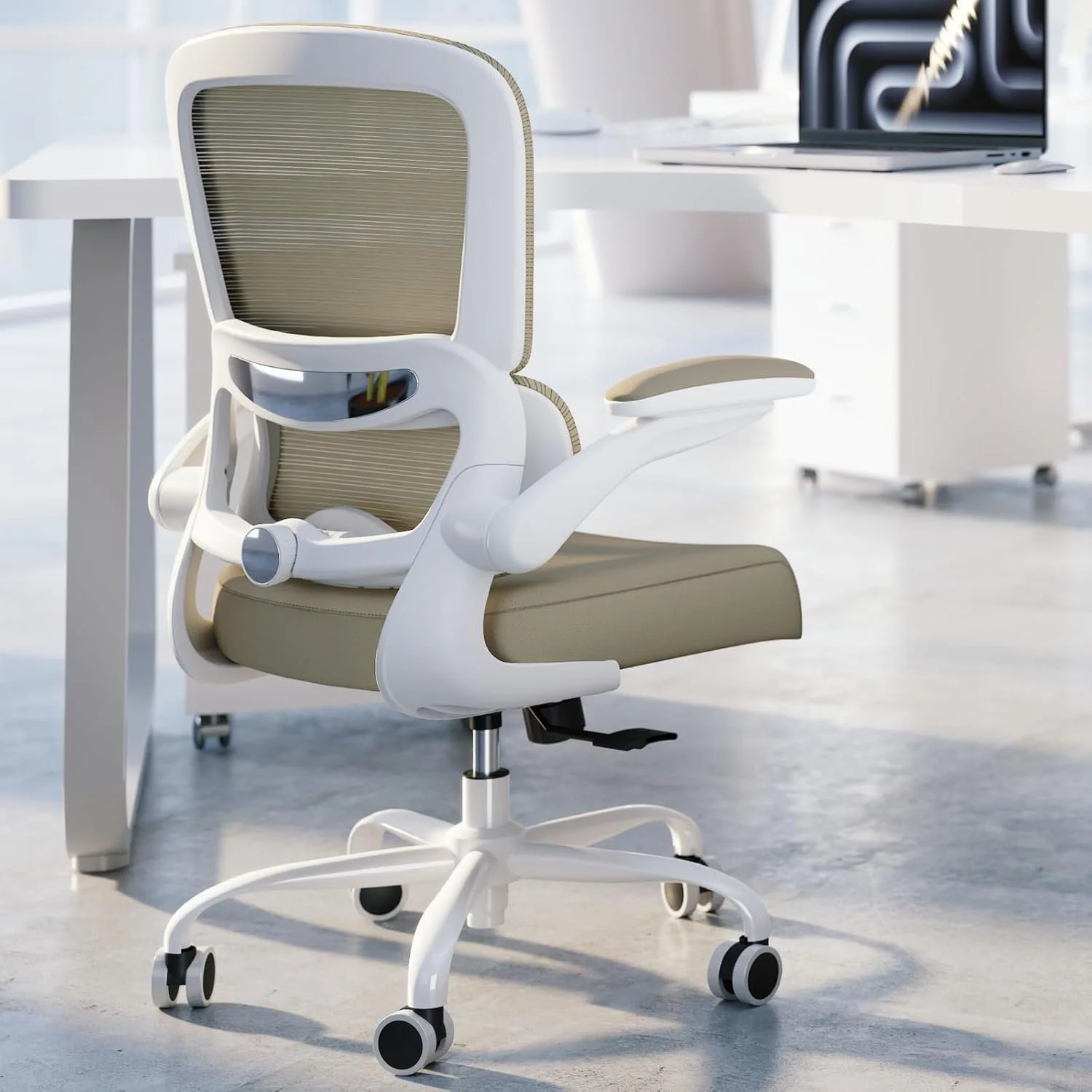
A thoughtful balance of ergonomic structure and warm, modern design. Adjustable height and lumbar support provide reliable everyday comfort, while the neutral tones blend seamlessly into a home office setting. A strong value option for those seeking support without visual heaviness.
2. Flash Furniture Whitney Mid-Back Leather Soft Office Chair
Design-Forward Pick
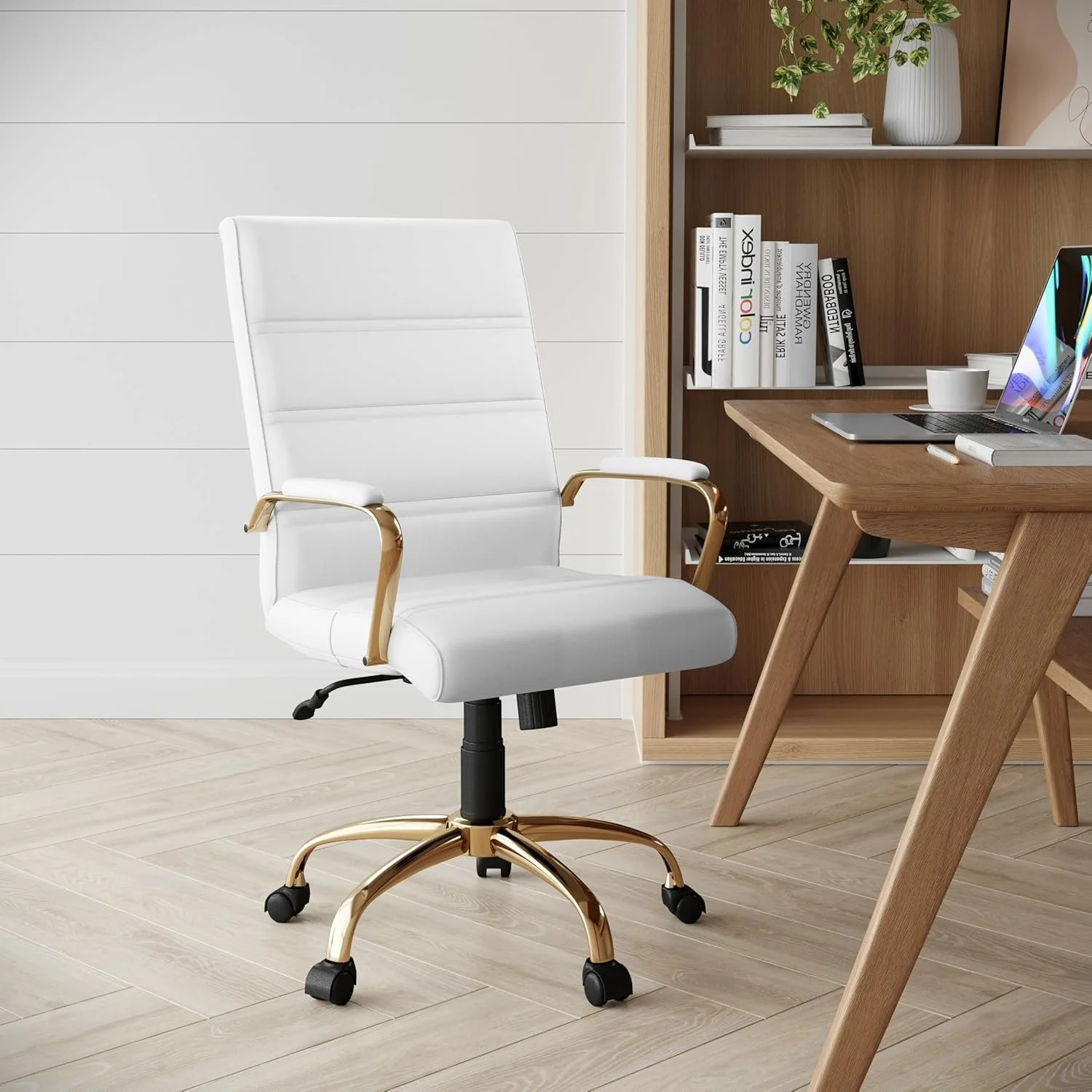
Tailored and polished, the Whitney brings a clean, contemporary presence to the workspace. Its streamlined silhouette prioritizes aesthetic refinement while still offering dependable task-level comfort. Ideal for design-conscious environments where style leads the conversation.
3. TRALT Office Chair – Ergonomic Mesh
Elevated Pick

With its breathable mesh back and classic ergonomic profile, this option leans slightly more functional while maintaining a clean visual footprint. Adjustable support and responsive movement make it a practical choice for longer work sessions at an accessible price point.
4. SIHOO M57 Ergonomic Mesh Office Chair
Performance-Focused Pick
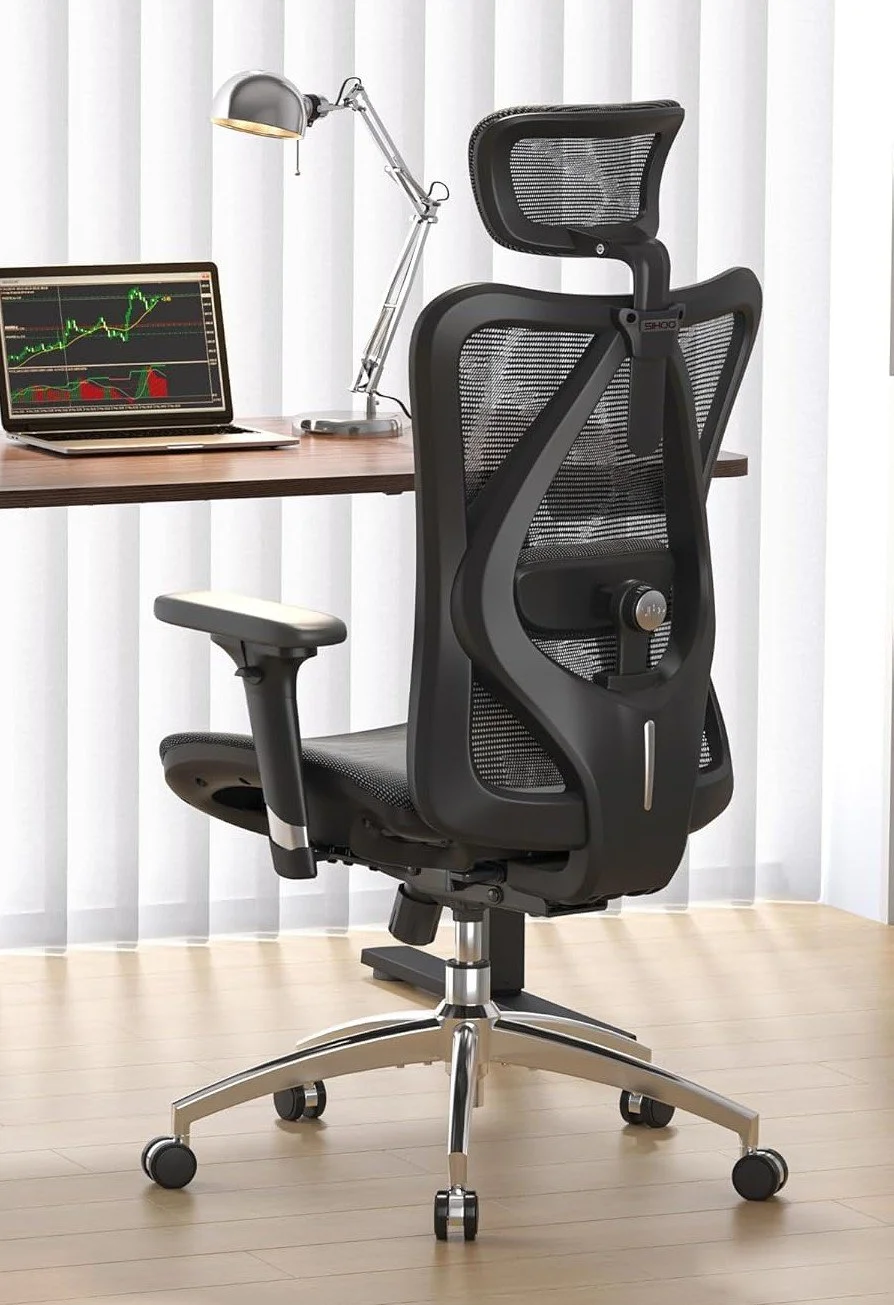
Designed for extended desk hours, the SIHOO M57 introduces stronger ergonomic structure, including headrest positioning and enhanced lumbar support. Its slim frame keeps the aesthetic modern while delivering greater adjustability for sustained comfort throughout the day.
5. FLEXISPOT ErgoX Premium Ergonomic Office Chair with Footrest
Investment Pick
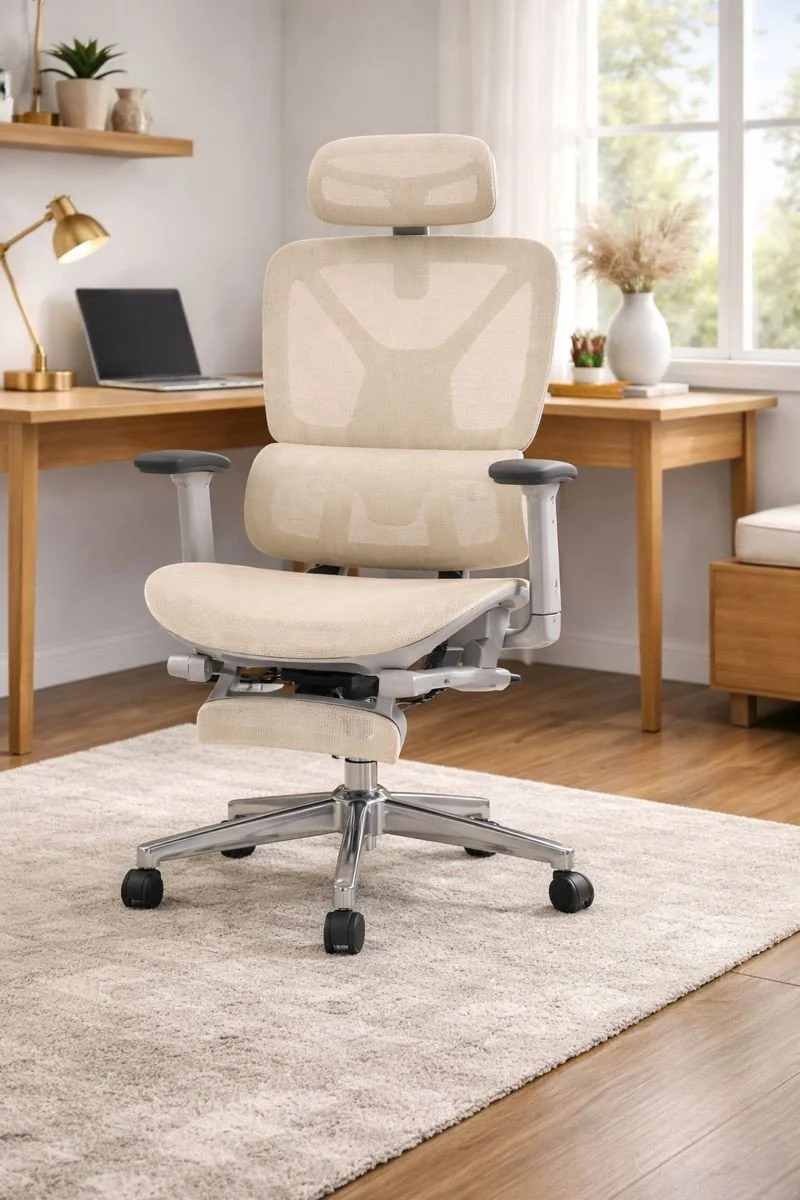
The FLEXISPOT ErgoX stands as a long-term comfort anchor, designed with advanced adjustability, dynamic lumbar support, and an integrated footrest to support full workdays and beyond. A considered investment for those who value both refined design and serious ergonomic performance.
A well-designed workspace should feel as supportive as it looks — and just as intentional. When you thoughtfully balance style, ergonomics, and long-term durability, you create an environment that works with you — not against you. Choosing intentionally today ensures comfort and confidence in the years ahead.
A New Year Refresh: Resetting Your Workspace with Intention
The start of a new year isn’t just about a refresh—it’s about a reset.
It’s the time when many of us take a closer look at how we’re living, working, and caring for ourselves. Whether that means refreshing areas of our home, adopting healthier routines, or simply being more mindful in our daily choices, one thing remains true: every decision should be intentional.
That same mindset applies to your workspace.
When your work environment is thoughtfully designed, it becomes more than a place to get tasks done—it becomes a space that supports focus, comfort, and overall well-being. Surrounding yourself with pieces that are not only functional, but also purposeful, plays a key role in optimizing performance.
Whether you work from home, in an office, or within a hybrid environment, the furniture and accessories you choose should serve multiple roles.
First, function comes first.
Select pieces that support how you actually work. A desk should not only fit your space, but also offer adequate surface area, storage, and tech-friendly features that make connectivity seamless and efficient.
Second, let your space reflect you.
Your workspace should feel like an extension of your personality and aesthetic. Whether your style leans modern, trendy, or traditional, maintaining consistency across your pieces creates a more cohesive and visually calming environment—one that you enjoy spending time in.
Third, prioritize health and wellness.
Given the number of hours spent at your desk, investing in ergonomic furniture is essential. A well-designed chair with proper ergonomic features helps support alignment and reduce physical strain. Height-adjustable desks offer the freedom to alternate between sitting and standing, helping to counteract the health risks associated with prolonged sitting.
Wellness extends beyond the physical. Lighting that properly illuminates your work surface reduces eye strain. When working across a wider desk or multiple screens, even illumination becomes especially important. An adjustable desk lamp with customizable lighting modes can help evenly light the workspace, supporting focus and visual comfort throughout the day.
The right floor covering beneath your chair supports ease of movement while protecting your floors. Thoughtfully chosen desktop accessories ensure everything has a dedicated place, keeping essentials within reach and reducing visual clutter.
Finally, personal touches matter.
Greenery, framed photos, and meaningful décor bring warmth, familiarity, and a sense of identity into your space—reminding you of what matters most. Your accessories are an extension of your personality.
As we step into a new year, consider your workspace not just as a functional zone, but as a space that supports your well-being, clarity, and alignment.
Here’s to a new year—and a workspace designed with intention. ✨
How to Choose an Ergonomic Chair Without Sacrificing Style
Choosing an ergonomic chair shouldn’t feel like a compromise between comfort and aesthetics. Yet for many people, it does. Chairs are often purchased quickly, based on appearance, price, or a handful of online reviews — without fully understanding what actually makes a chair supportive over time.
The truth is, an office chair isn’t just another piece of furniture. It’s something you interact with every single day. The right one supports how you work, how you feel, and how you show up — physically and mentally.
Over time, I’ve seen a clear pattern in how people make chair decisions. Most purchases are driven by three key factors: design, comfort, and price. Understanding how these elements work together — and knowing which one matters most for you — makes all the difference.
The Three Drivers Behind Every Chair Purchase
Every chair purchase, whether intentional or not, tends to follow the same progression. First, something catches the eye. Then comes the question of comfort. Finally, price enters the conversation.
When these drivers are understood — and evaluated in the right order — it becomes much easier to choose a chair that truly fits both your workspace and your needs.
Design & Style: The First Emotional Connection
Design and style are almost always the starting point. Before a chair is ever tested or adjusted, it has to visually belong in a space.
People are drawn to chairs that feel aligned with their environment — the shape, the materials, the color, the overall silhouette. This is especially true in home offices, where workspaces often blend into living areas. A chair that feels too clinical or out of place can disrupt the look and feel of a room, no matter how supportive it claims to be.
Design creates the initial connection. It’s important — but it shouldn’t be the only factor guiding the decision.
Comfort: Where Ergonomics Truly Matter
Once design draws someone in, comfort becomes the deciding factor — and this is where ergonomics play a critical role.
Comfort isn’t one-size-fits-all. How long you sit in a chair each day should directly influence how many ergonomic features you need. Someone working a few hours at a desk may not require the same level of adjustability as someone sitting for a full workday.
The most impactful elements tend to be:
Proper back and lumbar support
A supportive, well-proportioned seat
Arm support that reduces strain on shoulders and neck
When these elements work together, a chair supports the body naturally — rather than forcing it into position. Over time, that support can make a noticeable difference in focus, energy, and overall wellbeing.
Ergonomics aren’t about complexity. They’re about fit.
Price: The Final Consideration — and the Most Misunderstood
Price is typically the last factor in the decision process, but it’s often the one that causes the most hesitation.
Many people are willing to invest more once they experience true comfort — especially when sitting in a chair in person. Online purchasing can make this more challenging, which is why content, reviews, and strong visual context are so important when evaluating chairs digitally.
It’s also important to recognize that not everyone needs every ergonomic feature available. Understanding your specific needs helps prevent overpaying for adjustments you’ll never use.
Value isn’t about buying the most expensive option — it’s about choosing the right one.
The Mattress Comparison
There’s an analogy I often return to when thinking about chairs.
Many people willingly spend hundreds — even thousands — of dollars on a mattress they sleep on for six to seven hours a night. Yet those same people may hesitate to invest in a chair they sit in for a similar amount of time each day.
When you think about it that way, investing in proper seating becomes far easier to justify. A well-designed chair supports your body during some of your most productive hours. Over time, that support adds up.
A More Thoughtful Way to Choose
The right chair does more than support posture. It supports how you feel when you sit down to work — how focused you are, how comfortable you remain, and how your workspace reflects who you are.
When design, comfort, and price are considered intentionally, the result is a chair that truly works for your life — not just your desk.